
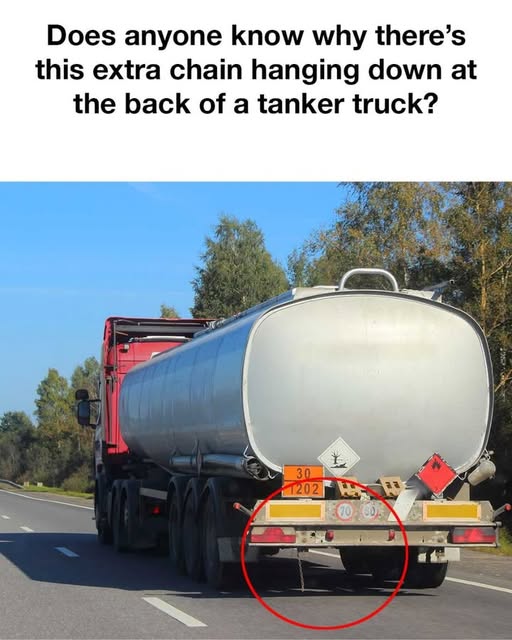
Never realized this
Safety is a paramount concern in the transportation of hazardous materials, and regulations governing tanker trucks are stringent. Various international and national bodies, such as the Department of Transportation (DOT) in the United States, have established guidelines to ensure the safe operation of these vehicles. These regulations cover aspects such as tank construction, pressure limits, and static electricity management. The grounding chain is a mandated safety feature, and its presence and functionality are often checked during routine inspections. Compliance with these regulations is essential to prevent accidents and ensure the safety of both the transport personnel and the public.
The Science Behind Static Electricity and Fuel Transport
Static electricity is a common phenomenon that occurs when two surfaces come into contact and then separate, causing an imbalance of electric charges. In the context of fuel transport, the movement of liquid within the tanker can generate static electricity due to friction. This is particularly concerning with flammable liquids, as a static discharge can ignite vapors and lead to explosions. The grounding chain provides a conductive path for the static charge to dissipate safely into the ground, preventing the buildup of potentially dangerous electrical energy. Understanding the science behind static electricity is crucial for developing effective safety measures in fuel transport.
Alternative Methods for Grounding Tanker Trucks
