
Where Is Chlorfenuron Used?
- Banned: European Union, Canada, and several other regions.
- Permitted: Some farms in Asia, especially in China, India, and Thailand.
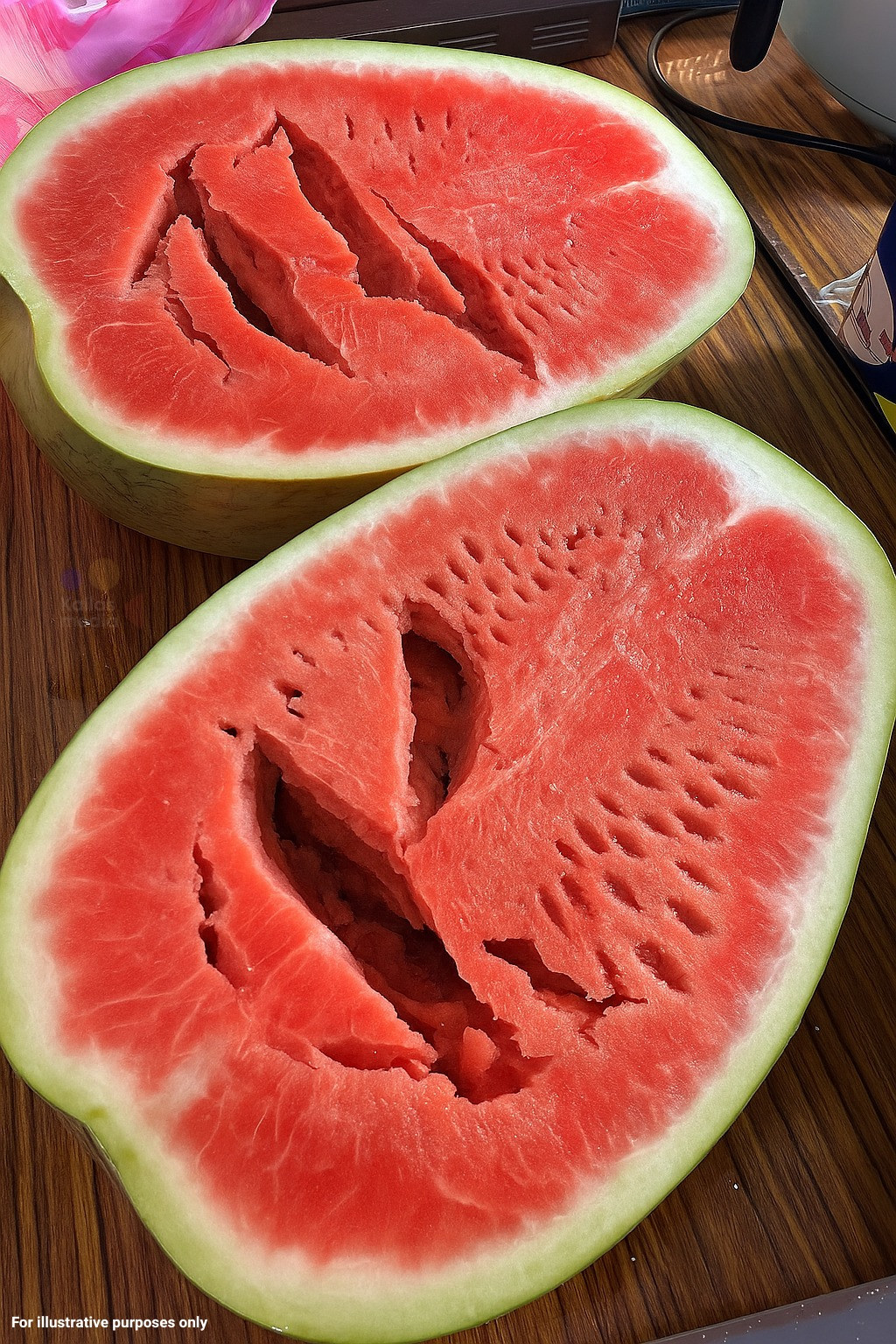
That means even if a watermelon looks fine on the outside, the inside could be cracked and compromised.

How to Choose a Safe Watermelon
- Check the outside: Look for a whole rind with a dry stem and a creamy-yellow field spot (where it rested on the ground).
- Inspect the flesh: Avoid fruit with cracks, holes, or uneven coloration.
- Check the origin: Safer options often come from countries with strict food standards (EU, Turkey, France).
- Go organic if possible: It costs more but reduces chemical exposure.
- Trust your senses: If the taste is mealy, overly sweet, or has a soapy aftertaste—don’t eat it.
Benefits of a Natural Watermelon
When grown without chemicals, watermelon delivers:
- Heart support and circulation health
- Natural hydration and detox
- Brain function support
- Stress relief and better sleep

What Not to Do
- Don’t eat watermelons with cracks inside.
- Don’t buy fruits without a clear origin label.
- Don’t rely only on looks—the texture, smell, and taste matter too.
Bottom Line: Better Safe Than Sorry
A cracked watermelon may look harmless, but it’s often a warning sign of unnatural growth. While it might be tempting to eat it, the risks outweigh the rewards.
Choose natural, fragrant, and firm watermelons grown without chemical shortcuts—so you can enjoy summer’s sweetest fruit safely and healthily.
Pages: 1 2
