
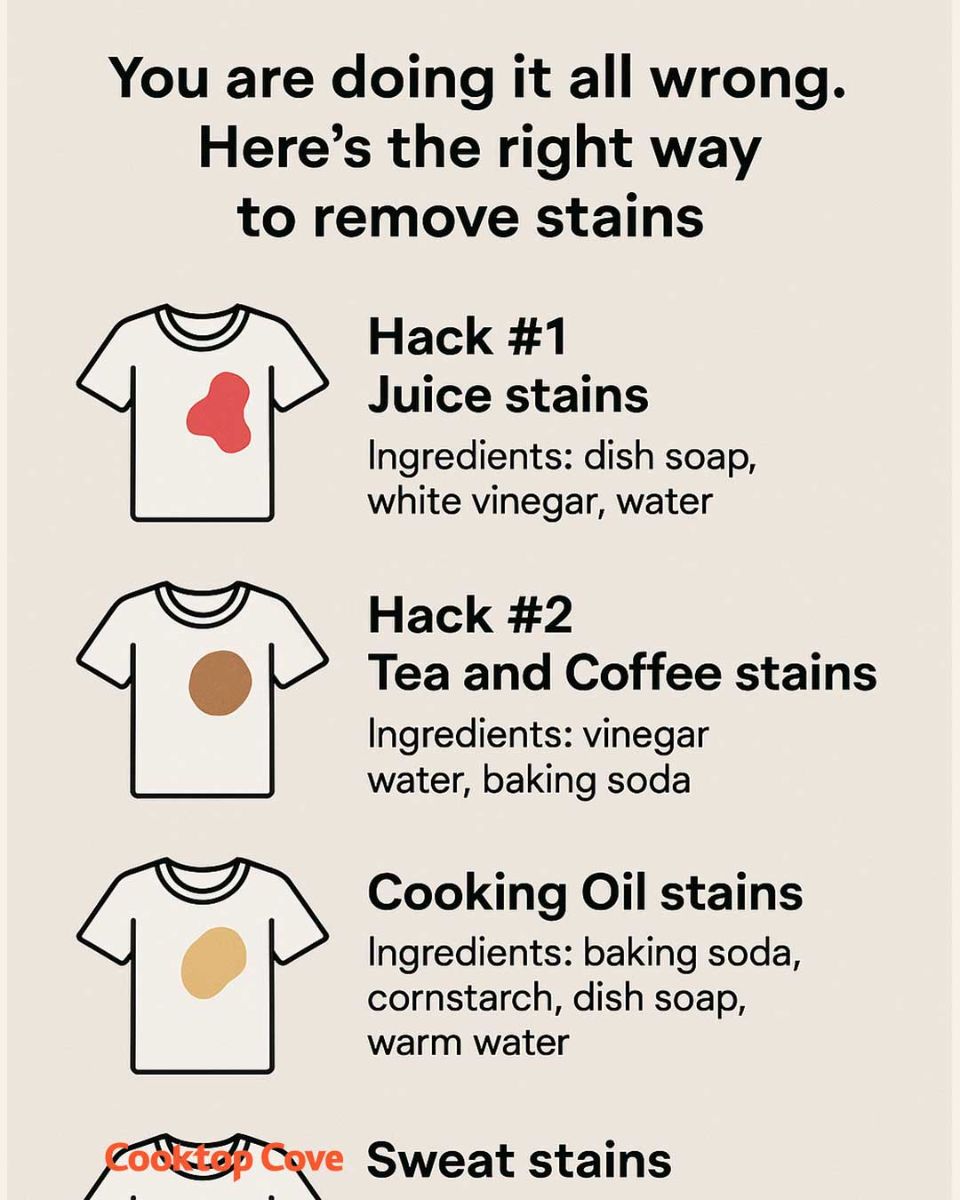
You are doing it all wrong. Here’s the right way to remove stains
Sweat stains often appear as yellow marks on white clothing. To remove them, create a paste of baking soda and water, and apply it to the stain. Let it sit for 30 minutes before rinsing with cold water. For tougher stains, add a few drops of hydrogen peroxide to the paste. Be cautious with colored fabrics, as hydrogen peroxide can bleach them.
Eliminating Cooking Oil Stains with Simple Solutions
Oil stains require a degreasing approach. Sprinkle baking soda or cornstarch on the stain to absorb excess oil. Let it sit for 15 minutes before brushing it off. Apply a few drops of dish soap directly to the stain, gently rub it in, and rinse with warm water. Launder the fabric in the hottest water safe for the material.
Dealing with Wine Stains: Step-by-Step Guide
Red wine stains can be daunting, but quick action can save the day. Blot the stain with a clean cloth to absorb as much wine as possible. Sprinkle salt on the stain to absorb the wine. After a few minutes, rinse with cold water. Apply a mixture of hydrogen peroxide and dish soap (equal parts) to the stain, let it sit for 30 minutes, then rinse and wash.
Removing Ink Stains: Best Practices
Ink stains can be challenging due to their dye content. Place a paper towel under the stained area to prevent spreading. Dab rubbing alcohol onto the stain using a cotton ball, blotting gently. Repeat until the ink lifts. Rinse with cold water and wash the fabric. For persistent stains, try a commercial ink remover.
Getting Rid of Blood Stains Safely and Effectively
Blood stains should be treated with cold water to prevent setting. Rinse the stain under cold running water, then apply a paste of baking soda and water. Let it sit for 30 minutes before rinsing. For older stains, hydrogen peroxide can be used, but test on an inconspicuous area first to avoid bleaching.
Handling Grass Stains: Proven Methods
Grass stains are common on children’s clothing. Pre-treat the stain with a mixture of vinegar and water (1:1 ratio). Let it sit for 10 minutes, then scrub gently with a soft brush. Rinse with cold water and apply a few drops of dish soap before washing the fabric.
Chocolate Stains: Quick and Easy Removal Tips
Chocolate stains can be sticky and stubborn. Scrape off excess chocolate with a dull knife. Apply a mixture of dish soap and water to the stain, blotting gently. Rinse with cold water. For persistent stains, use a stain remover before laundering.
Mud and Dirt Stains: Cleaning Strategies
Allow mud to dry completely before attempting to remove it. Once dry, brush off as much as possible. Mix a solution of dish soap and water, and apply it to the stain with a clean cloth. Blot until the stain lifts, then rinse with cold water and wash as usual.
Makeup Stains: How to Erase Them from Fabrics
Makeup stains, especially from foundation or lipstick, can be tricky. Blot the stain with a makeup remover wipe. Apply a few drops of dish soap to the stain, gently rubbing it in. Rinse with cold water. For stubborn stains, use a stain remover before laundering.
Grease Stains: Solutions for Tough Spots
Grease stains need immediate attention. Sprinkle cornstarch or baking soda on the stain to absorb the grease. Let it sit for 10 minutes, then brush off. Apply dish soap directly to the stain, rub gently, and rinse with warm water. Launder in the hottest water safe for the fabric.
Conclusion: Maintaining Stain-Free Fabrics
Keeping fabrics stain-free requires prompt action and the right techniques. By understanding the nature of different stains and using the appropriate removal methods, you can extend the life of your clothing and household items. Regular maintenance and having a well-equipped stain removal kit will help you tackle stains effectively, ensuring your fabrics remain in excellent condition.
Pages: 1 2
