
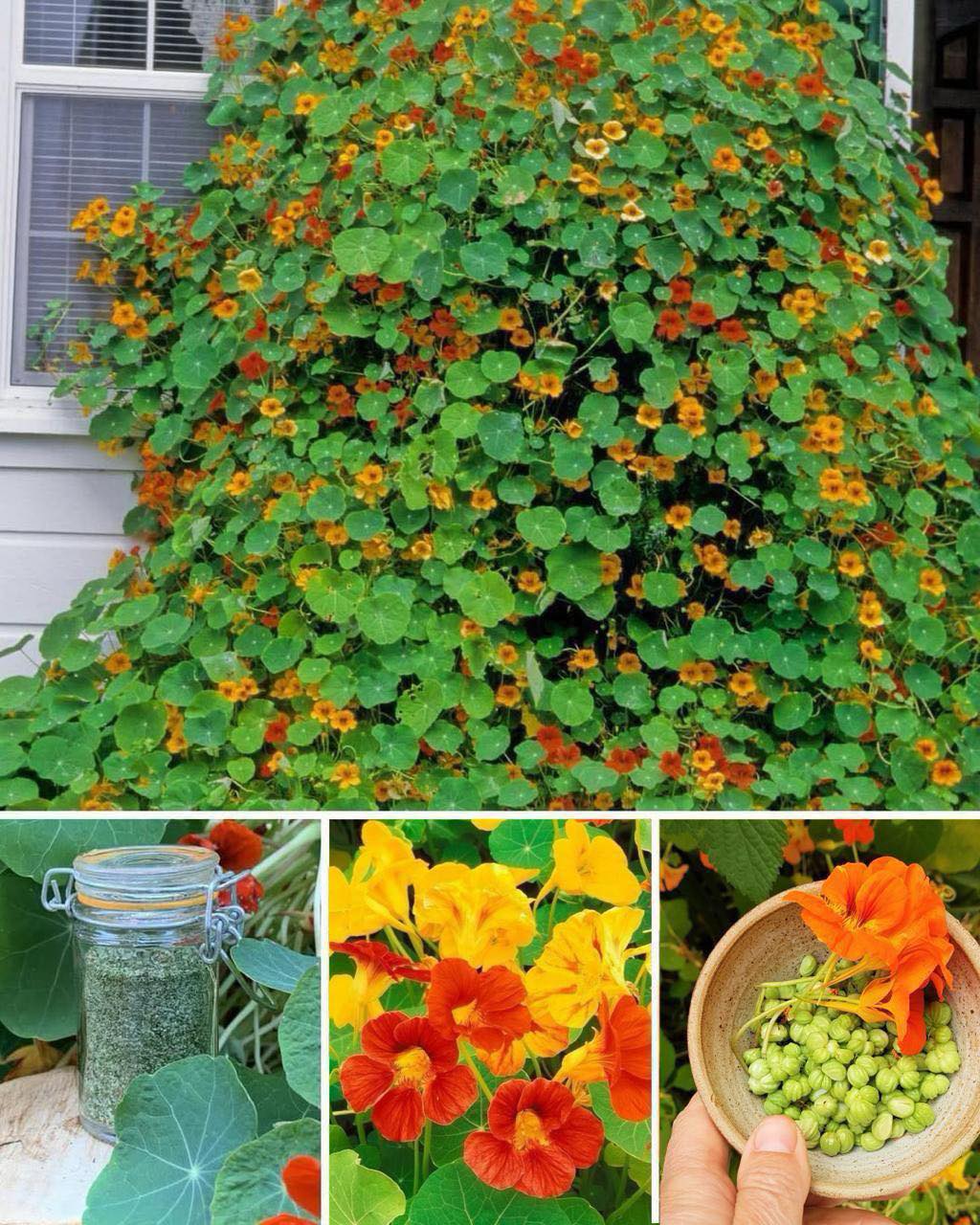
Nasturtiums are a versatile, vibrant, and highly beneficial addition to any backyard garden. Known for their beautiful blooms in shades of orange, yellow, and red, these plants not only add color and charm to your outdoor space but also offer a range of practical uses. From natural pest control to attracting pollinators, nasturtiums are an easy-to-grow, edible plant that brings value to gardens of all sizes. Let’s explore why nasturtiums are a must-have and how you can use every part of this remarkable plant.
Benefits of Growing Nasturtiums in Your Backyard
1. Pest Control: A Natural Solution for Garden Health
Nasturtiums act as a “trap crop,” meaning they attract pests like aphids, caterpillars, and whiteflies, diverting these harmful insects away from your more delicate plants. This makes nasturtiums an excellent companion for vegetables like tomatoes, cucumbers, and peppers. By planting nasturtiums nearby, you’re creating a natural defense system in your garden, reducing the need for chemical pesticides.
2. Attracts Pollinators: A Boost for Garden Productivity
Nasturtiums are loved by bees, butterflies, and beneficial insects due to their bright, eye-catching flowers. Pollinators are essential for the reproduction of many plants, including fruits and vegetables. By attracting these helpful creatures to your garden, nasturtiums contribute to better pollination and, consequently, increased yields from plants like squash, zucchini, and berries.
3. Easy to Grow: Low-Maintenance and Resilient
One of the greatest things about nasturtiums is their resilience and ability to thrive in poor soil conditions. In fact, they often do better in low-nutrient soil where other plants might struggle. This makes them a fantastic choice for gardeners seeking low-maintenance plants. Nasturtiums are drought-tolerant and grow quickly, spreading through your garden with minimal effort. They require only occasional watering and will even flourish in container gardens or hanging baskets.
4. Edible and Delicious: A Unique Ingredient for Creative Cooking
Every part of the nasturtium plant—flowers, leaves, and seeds—is edible, adding a unique, peppery flavor that can enhance a variety of dishes. The flowers, with their bright colors and delicate texture, are perfect for salads, while the leaves can be used in a range of savory applications. The seeds, when pickled, make a flavorful substitute for capers. This makes nasturtiums an ideal choice for gardeners who enjoy experimenting with fresh ingredients in their cooking.
