
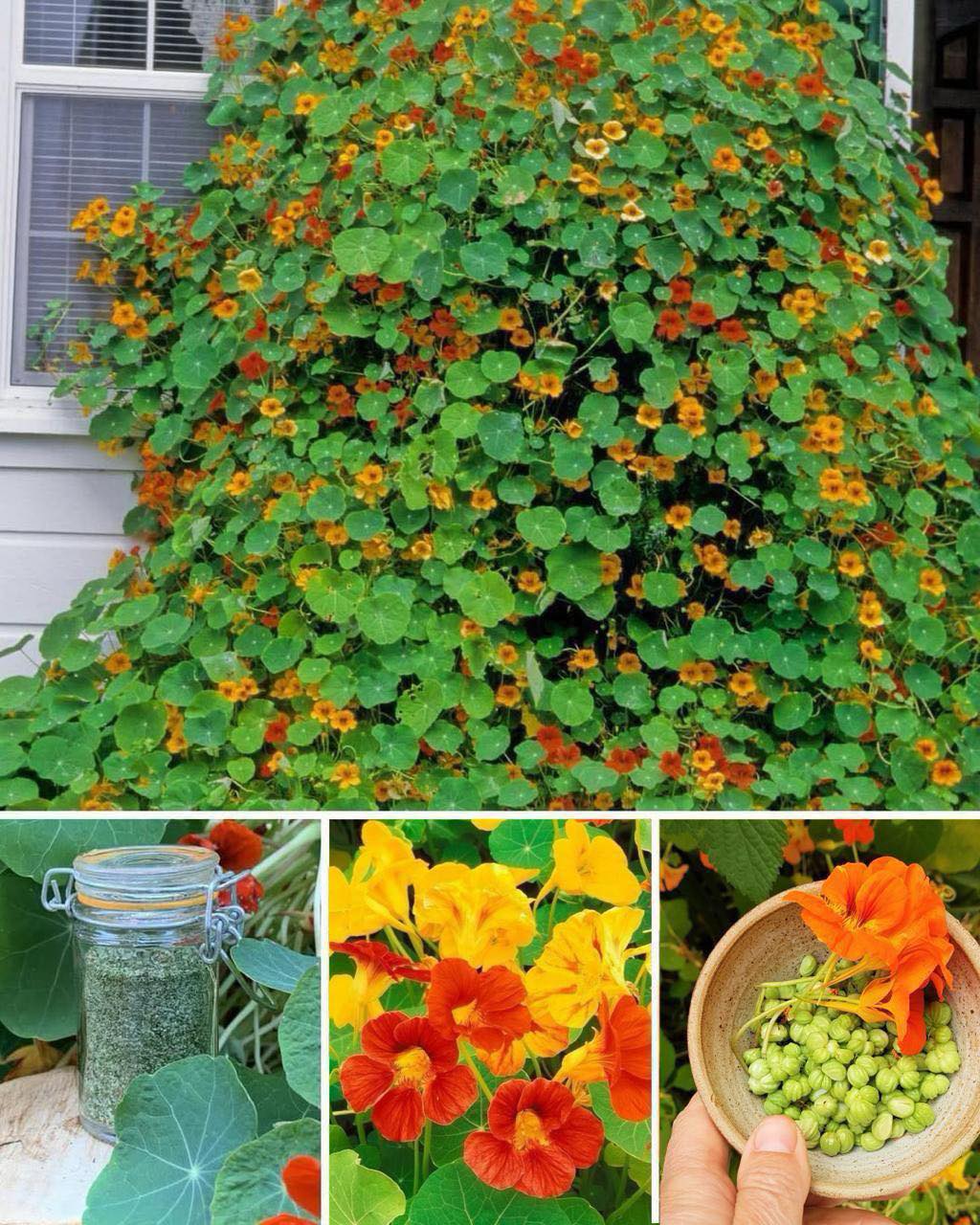
Each part of the nasturtium plant has its own unique taste and culinary application. Here’s a guide to incorporating nasturtium flowers, leaves, and seeds into your meals.
1. Flowers
- Taste: The flowers have a mild peppery flavor, similar to arugula, which adds a refreshing bite to dishes.
- How to Use:
- Add flowers to salads for a pop of color and spice.
- Use as a garnish for appetizers, soups, and main dishes.
- Stuff the flowers with soft cheeses like goat cheese or ricotta for a visually stunning and flavorful appetizer.
2. Leaves
- Taste: Nasturtium leaves are spicy and peppery, making them perfect for enhancing savory dishes.
- How to Use:
- Use fresh leaves in salads, sandwiches, and wraps to add a zesty bite.
- Blend the leaves into pesto, adding an extra peppery kick that pairs well with pasta or grilled vegetables.
- Mix them into omelets or frittatas for an herbaceous, slightly spicy flavor.
3. Seeds
- Taste: The green seeds are tangy, with a taste similar to capers.
- How to Use:
- Pickle the unripe seeds to create “poor man’s capers” for use in salads, sauces, or as a condiment.
- Add the seeds to marinades for meats or vegetables for an extra layer of flavor.
- Grind the dried seeds and use them as a peppery spice to season roasted vegetables or dressings.
-
Growing and Caring for Nasturtiums
Nasturtiums are one of the easiest plants to grow, making them perfect for beginners and seasoned gardeners alike.
Planting
- When to Plant: Plant nasturtium seeds in the spring after the last frost, or start them indoors a few weeks earlier to get a jumpstart on the growing season.
- Soil: They do best in poor or well-draining soil, as high nutrient levels can lead to excessive foliage and fewer flowers.
- Sunlight: While nasturtiums can tolerate some shade, they prefer full sun for optimal growth and flower production.
Watering
- Frequency: Nasturtiums are drought-tolerant once established, so water them sparingly. Overwatering can lead to root rot, so ensure the soil is slightly dry before watering again.
Maintenance
- Pruning: Prune the plants lightly to control growth and encourage bushier plants with more flowers. Remove spent flowers to encourage further blooming.
- Pests and Disease: Nasturtiums are generally pest-resistant; however, they may attract aphids. If aphids become a problem, simply spray the plant with a strong stream of water to dislodge them.
Harvesting
- Flowers: Pick the flowers when they are fully open but still fresh. The flowers are best used immediately but can be stored in the fridge for a day or two.
- Leaves: Harvest young leaves for a milder flavor. Leaves can be used immediately or stored in the fridge for up to a week.
- Seeds: Harvest green seeds while they’re still tender, or allow them to dry on the plant if you plan to use them as a spice.
-
Health Benefits of Nasturtiums
In addition to their culinary uses, nasturtiums have several health benefits:
- High in Vitamin C: Nasturtium leaves and flowers are rich in vitamin C, which can support immune health and help fight infections.
- Antioxidant Properties: Nasturtiums contain antioxidants that protect against cell damage and support overall health.
- Antibacterial and Antifungal: The plant has natural antibacterial and antifungal properties, making it a great natural remedy in folk medicine.
- Rich in Nutrients: Nasturtiums also contain iron, calcium, and other trace minerals that contribute to overall wellness.
Creative Ways to Use Nasturtiums Beyond the Garden
-
Continue Reading in next page
